🏖 If you intend to travel to Socotra or want to know more about what travel in Socotra looks like then welcome!
Here I share a series of posts that provide some clarity on what to expect if you are planning a visit – clarifications on the safety side of things, the best tour operator to book with, and the best places to visit on Socotra Island, Yemen.
We planned, booked and made the journey to Socotra a couple of years back. After many years of longingly searching the web and each time falling further in love with the images that popped up, we knew it was a must on our travel bucketlist.
In these series of posts, I share firsthand our experiences on our travel to Socotra. So read on to learn about visas, booking a tour and price, how to book flights, currency, tipping, what to wear and pack, the best time to travel and so on. I love photography, so I share some tips on what to ask your travel guide so that you can capture the photos that you need.
I also include my thoughts on sustainable and responsible travel on the island. Information related to the dragon blood tree, camping versus hotels, volunteering opportunities and the UAE and Socotri relationship.
Basically, I share ALL the travel tips across a total of four posts. In other words, everything you’ll need to know for visiting Socotra. Have a look around… and contact me if you have ANY questions at all.
* This post may contain affiliate links that may earn me a small commission should you decide to click through and make a valid purchase (at no extra cost to you). Thanks for your support!
Table of Contents
Tourism & Travel to Socotra

One of the most unique elements to visiting Socotra is that just over 100 people visit per week. This is because currently just two flights arrive and depart a week. The busiest flight, Air Arabia, arrives from Abu Dhabi with about 100 people onboard. Given it’s a turnaround flight a returning 100 people later the same Monday are bound for home via Abu Dhabi.
This number of visitors makes exploring Socotra island rather cozy. You’ll bump into familiar faces, others on the same flight, as you travel around Socotra. Expect to see many photographers, nature lovers and other off the beaten track travel lovers… they are all there for the same reason you are!
There are only a handful of tour operators and they will sponsor your visa so that you can enter the Republic of Yemen. And they will take care of your every need.
I recommend you read my post on booking the right tour to Socotra. In this post I explain further how tourism on the island works along with information about the tour type we booked, and the price. Otherwise read on for more on currency, packing and planning – the need to know stuff – to help you plan your travel to Socotra.

I recommend Traveling Socotra – don’t go with anyone else!
Visas / Safety / Money and Tipping

Safety
One of the most common messages I get from readers, is the question – is it safe to travel to Socotra? The short answer – yes it is. Socotra isn’t mainland Yemen and the island has been receiving visitors regularly over the last few years now.
Of course I always recommend booking travel medical insurance ahead of a trip with SafetyWing. I confirmed with the SafetyWing team that, they DO indeed cover Socotra! They also provide two options of cover – Nomad Essential and Nomad Complete. Use the SafetyWing calculator below to check how much you might expect to pay for an 8 day trip to Socotra.
Currency

The most widely accepted currency in Socotra is US Dollars. The tours are essentially all inclusive and after you have paid your trip and put aside money for tipping the driver, guide and cook, there is little else to pay for. Though it’s definitely a good idea to bring a little extra so that you can purchase small souvenirs here and there.
Tipping
It is recommended to tip the guides, drivers and cooks 10-20 USD each per day. This indication ranges between fair to generous, so depending on your overall level of satisfaction you can make the call here.
Also, you might occasionally be provided a guide to specific destinations such as Hoq Cave or within Firhman with the Dragon Blood trees. Having some smaller USD notes is a good idea for tipping in these situations as well.
Shopping
There is a really beautiful shop which you might have the opportunity to visit at the end of your visit which I just loved. The Women’s Foundation has a lovely selection of handicrafts and by purchasing here you are also supporting a great cause.
Visas
These are arranged by your tour provider and are included in the overall tour fee. In 2013 Socotra was declared an autonomous governorate, and so they are now able to arrange visas directly on the island rather than through mainland Yemen. According to the tour providers this has made tourism a great deal easier for them to organise.
Read: Our guide to visas & the best guided tour of Socotra
Taking Kids to Socotra

Okay so this is a great question… and we had honestly intended on taking our two girls aged 7 and 9 to Socotra. Following all the information we had read and people we had spoken to, we were advised that travel to Socotra is safe for children, and also that they would be very welcome.
We had gone so far as booking our two to come with us, and then in the last month, from a budget point of view we decided against it. Given that we travel full-time, this type of holiday pushed our weekly budget well beyond what we would normally spend. And so, we decided instead to enjoy some time away from the kids in a destination that we had long wanted to visit. Time for ourselves for a change.
Tips for Taking Kids
If you plan to take the kids there are a few things I would suggest you keep in mind…
- The time of year you visit should be taken into consideration, as it can get very hot in April and May during the middle of the day.
- The walks up to the Infinity Lake and Hoq Cave are very steep and quite intense walks. Children should be used to somewhat intermediate level mountain walks. The terrain is very rocky and at times unstable, so suitable footwear is a must. Our kids always travel with these Keens.
- If you choose to take the camping option, then you’ll often be staying on the beach, so the ocean is nearby.
- The food is very good but quite simple, beans, fish, rice and salad. If you have a fussy eater on your hands, then perhaps you want to bring extra snacks to keep bellies full.
- These Mosquito bands are a great idea for keeping them protected.
- Be aware seat belts aren’t really a thing on the island. If you want to bring a car seat it would be advisable to check with the tour provider.
Best Time to Travel to Socotra?

The travel season on Socotra begins in October and goes through till May. The in between months are known as the windy months and can be a bit of a rough time to be in Socotra according to some expats we met living on the island.
April is beginning to get pretty warm and May I imagine could get a bit uncomfortable during the middle of the day, but this is a great time to see turtles nesting on the island. December and January can be a bit wet, so my recommendation would be March and April.
We went in April and loved this time of the year. The bottle trees were in bloom and the pink flowers dotted along the hillsides made for a stunning sight. Though I’m sure any time of the year you visit, you will have the adventure of a lifetime.
What to Pack for Socotra

If you are camping you will need a few things to keep comfortable. I love my sleep and at the risk of sounding like a bit of a snob the camping is pretty rugged. So below are my tips for a more comfortable experience.
I have broken it down into two packing categories – must haves & recommended extras.
Packing Must Haves
- First aid kit – Fucidin, Imodium, general antibiotic, Panadol, plasters.
- Head torches are a very good thing to have for the cave walk and camping.
- A few rolls of toilet paper are always a good idea.
- A really good microfibre towel.
- Solar Power Bank – (this is the one we used and recommend). We charged our DJI mini drone, mobile phone and camera batteries on it most of the time.
- A car charger with multiple ports – likewise with this. There is no electricity if you are camping and these are an absolute must.
- Dual purpose water-friendly and hiking shoes. We can’t recommend our Tropic Feel shoes enough! One minute you’re on the beach, the next in the mountains, and they dry immediately, making them super practical for Socotra. I love the Canyons, while Mike prefers his Monsoons.
- Some seriously good sunblock – the sun is HOT and it burns!
- A very good hat and sunglasses.
- Protein bars – these were great for a bit of a pick me up when we needed them.
Packing Recommended Extras

- Foam mattresses are provided – however they are on the thin side so put in a thin inflatable mattress if you have room.
- Sleeping bag – sheets are provided but I tend to feel the cold and ended up using my sleeping bag a couple of times.
- Bring your own snorkel and mask – Our Cressi kit is a must for us. On the first morning when dolphins swam past us at 6 am on Arhar Beach I was grateful we had them with us at hand.
- Lifestraw bag – we used ours to reduce the amount of plastic water bottles we would use on Socotra Island.
- Camera Gear – DJI Mavic Mini drone (this is the one we have) and filters, camera with lenses and multiple batteries, Go-Pro with filters. We keep everything packed in our Wandrd PRVKE camera bag.
- Alternatively combine your packing – gear and camera kit together – in this awesome little Tropic Feel Shell Backpack. Basically start with the shell and add the accessory of your choice – toilet bag / camera cube / wardrobe and so on.
- A 10 L dry bag was big enough for our week on the island.
- We brought packets of dates which we were able to gift when we felt it was appropriate in certain situations.
- Soap free shampoos and cleansers. Because you will be camping off-grid you really want to be conscious about not putting soaps into the ocean. We used these shampoo bars and soaps.
- If you are a coffee snob like me then grab a Nanopresso. We don’t go anywhere without our one and I enjoyed starting the day with a quality cup of coffee. Read our Nanopresso review here.
- Ladies bring one of these menstrual cups (my fav) – trust me you don’t want to be messing around with anything else.
What to Wear

Before I get into what to wear, I’ll remind you that you are off-grid. So, forget washing machines and dryers. Your clothes will need to last the week, or two, if you stay longer. Think light, quick drying, breathable fabrics. We always pack super light and had three outfits each with us. We rinsed these in the wadis when they needed some freshening up which seemed to work very well.
Men will be fine wearing shorts and t-shirts. Singlets are also fine, but I would advise that you keep a t-shirt on hand. A long pair of trousers, and some light long sleeved clothing is good for the evening when the temperature drops. Woman are slightly different so carry on below for more details.
Women Travellers

As a woman you need to think sensibly about what to take in terms of suitable clothing. Remember Yemen is a strict Muslim country. Local woman are seldom seen. And when you do see them they will likely be wearing full abaya, covered completely except for their eyes.
This doesn’t mean that you’ll need to do the same, but as a courtesy you’ll need to keep in mind what you’re wearing at certain times. If in doubt ask your guide and he will let you know what is appropriate for the given situation.
The guides and drivers in Socotra are comfortable with foreigners in bikinis, shorts, singlets and vest tops. So, the majority of the time, like beaches, walks into the mountains and the campsites you’ll be okay wearing this kind of thing. However, when you get to towns and villages it’s best to be respectful and cover up. Basically hair, knees and shoulders should be covered when entering these busier kinds of locations.
I prefer to wear longer light clothing like cotton t-shirts and linen skirts to the ankle, which I can tuck up if I get hotter. I put a scarf around my neck to cover my hair in case I need to. And I carry a long shirt in my bag to throw on if the situation presents itself.
In other words, just be ready to cover up. And if you ever get the opportunity to join the women in a village, take it! They will shower you with curiosity and it’s a very special chance to get a glimpse into their lives.
Photography in Socotra and What to Pack

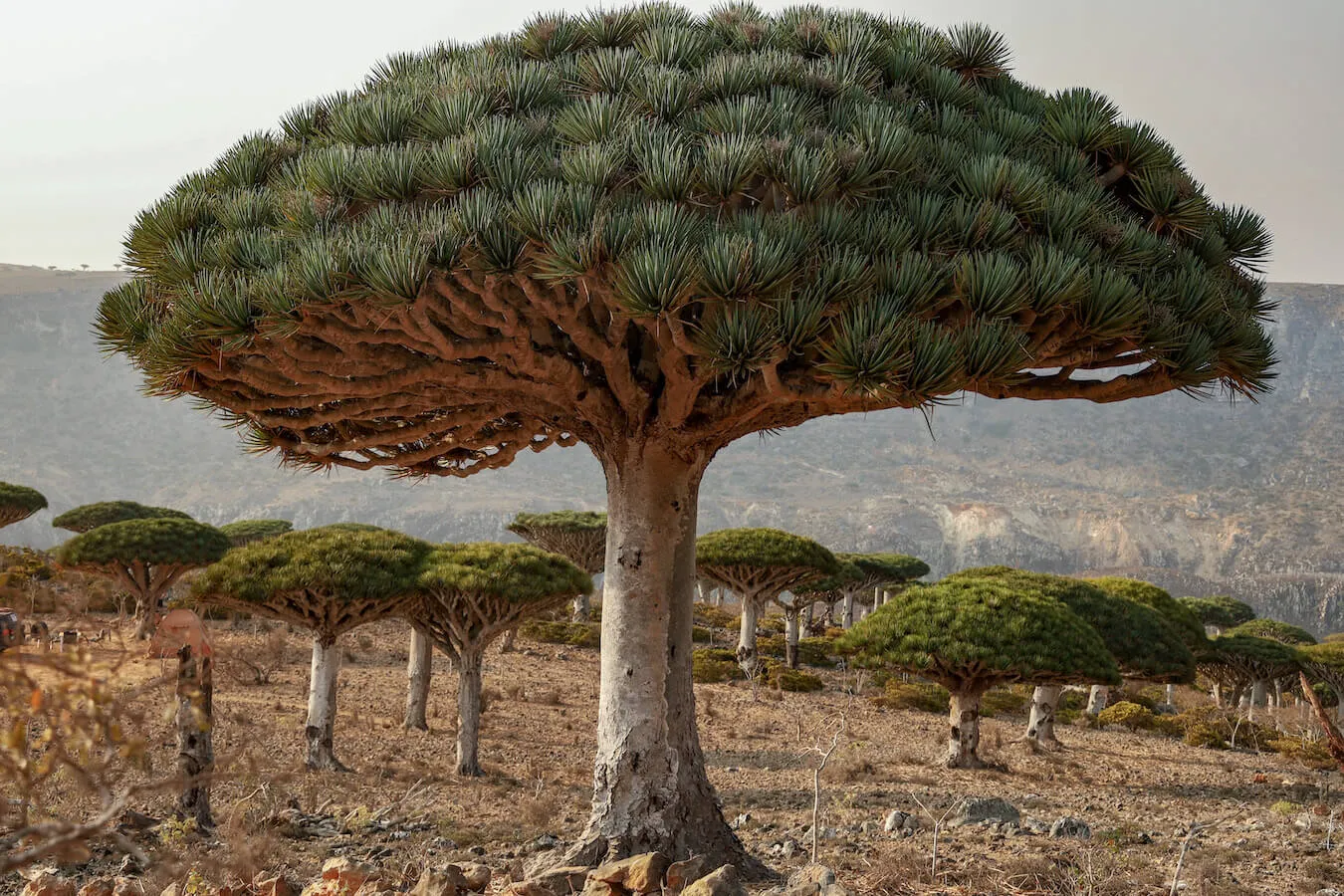
This is one of the most incredible destinations in the world. And if you are a photographer then chances are you are already familiar with some of the sights the island has to offer. Including the Dragon Blood tree.
To clarify, I am by no means a professional photographer. I just love to take photos and learn more the longer I experiment, read blogs and question other photographers. So below are my tips from a hobbyist perspective.
Drones in Socotra

If you are travelling in from Abu Dhabi then you will be able to bring a drone with you, and if you can then I thoroughly recommend it. This island is one of the best places I have flown my drone.
Keep in mind however, that charging them is no easy task. The batteries require a lot of juice, so it’s better if you have a DJI mini. Alternatively, if you are travelling with a bigger drone, then you may need to consider staying in the city hotel. This way you’ll be able to get it charged at the end of each day.
I recommend that you bring extra batteries, we travelled with three and used one each day. Before each flight, we thought about what shots we wanted and so made calculated flight plans before each flight.
If you are travelling via Egypt, then getting a drone in may be more difficult. Check here for more.
Don’t forget to travel with some good CPL filters to take away ocean glares etc.
Cameras


Bring your favourite camera and the best lenses you’ve got.
A quick warning – the sand and dust gets everywhere! I mentioned in the packing list above to be prepared with a dry bag, Wandrd PRVKE camera bag, or a Tropic Feel Shell Backpack. And I also recommend a small travel cleaning kit. We were constantly brushing dust and sand off the camera and lenses when it had been left out of the bag.
We also loved having a Go-Pro for the dolphins and the wadi where we were able to get a few clips of places that we couldn’t have got to otherwise.
Tripod

Don’t leave your tripod behind if you want to get photos inside Hoq Cave. OR if you want to practice night photography under the Dragon Blood trees.
I also met a photographer who was travelling with an iPhone for her night photography. She used a great little phone tripod, this combined with a 30 second exposure on her iPhone 12, I was very impressed by the photos she managed to capture.
Photography Tips

Let your guide know on the first day that you love photography and fingers crossed he will help you get what you need. I specifically asked to sleep under a Dragon Blood tree and I’m so glad I asked as boy did he deliver.
Note: IF you book as part of a group tour the possibility of this will be less likely. I definitely recommend travelling as a small group or couple to get the best photography opportunities. I recommend a private trip with Traveling Socotra for this reason.
Ask your guide if you can stay in Firhman Forest as this is the BEST place to photograph dragon bloods.
Also, wake early in the morning and get to the special sights early. That way you’ll have them to yourself. Alternatively stay longer till other travellers have left – we did this at the wadi and it was one of my favourite afternoons in Socotra.
More from my Travel Socotra Series

Don’t miss the other posts as each blog shares something new –
- Is it Safe to Travel to Socotra
- A Socotra Tour Review & Guide to Tourism on the Island
- 10 Beautiful Locations and Reasons to Visit Socotra
Book with Traveling Socotra, you won’t regret it!
I hope this post has shed some light on your travel to Socotra. And I urge you to contact me if you have questions that I have not covered here.
Don’t forget to follow us on Instagram, Pin this post or Bookmark for later!


We are a travel LOVING FAMILY, who chose to travel full-time for 3 years, BUT now live in Bali. Sign up to follow our journey, and to get our itineraries and guides on all the destinations we visit!



Happy to find this blog! Plenty of useful information 🙂
Socotra Island is such an unique place (and a hidden gem).
Oh wow… thanks for your message Elisa, I’m so happy to know you find it helpful. It certainly is a special place and I hope it continues to stay hidden ☀️
Thank you for all the fantastic tips! I am just considering going, last day to decide is tomorrow, and had so many questions – most of them you were able to answer 🙂
Socotra is on my bucket list since a loong time, alonside with Yemen – which is obviously out of question now.
Still, foreign ministries of all Western countries I have checked say it’s DO NOT GO recommendation!
So glad to see yours and some others’ reassuring tips…
Hi Ida, thanks for your comment and I’m glad our tips helped. And you are right, there is so much conflicting information out there, particularly those posts published on government travel websites.
Feel free to get in touch with any unanswered questions… and if you decide to go, have the most incredible time!!!
Great blog! And tips. I am considering booking a trip for April – as I travel alone (my other half is not into travels that are demanding 😊), I will consider option of a small group. Do you suggest the 9 days itinerary or the 11 days? Thanks 🙏
Hi Liri, thanks for the comment… given the choice I would take 11 days!!!